
Cemetery Plots for Sale: Finding Affordable Burial Property
The thought of paying thousands of dollars for a final resting place can feel overwhelming, especially when you are already dealing with loss or trying to plan ahead on a fixed income. You may have heard stories of burial plots in major cities selling for $25,000 or more, and that number alone is enough to make anyone anxious. But here is what the funeral industry does not always advertise upfront: affordable cemetery plots are available in every state, and finding them is largely a matter of knowing where to look and which questions to ask. This guide walks you through the real costs, the overlooked alternatives, and the concrete steps you can take right now to secure a burial property that respects both your loved one and your bank account.
Table of Contents
- How Much Do Cemetery Plots Really Cost in 2026?
- Public vs. Private Cemeteries: Which Is More Affordable?
- The Hidden Savings of Green Burial and Cremation Plots
- 3 Proven Strategies for Finding Affordable Cemetery Plots
- What Happens If You Can’t Afford a Cemetery Plot?
- How to Buy a Cemetery Plot Without Overpaying
- Frequently Asked Questions About Affordable Burial
- Your Next Step Toward an Affordable Burial
How Much Do Cemetery Plots Really Cost in 2026?
Before you can hunt for a deal, you need a clear picture of what burial plots actually cost this year. The numbers vary dramatically depending on location, cemetery type, and the kind of interment you choose. Public cemeteries, which include municipal, county, and many religious cemeteries, remain the most budget-friendly option. A single casket plot in a public cemetery typically runs between $525 and $2,500. That is a wide range, but even at the high end, it is a fraction of what private cemeteries charge.
Private cemeteries operate as for-profit businesses, and their pricing reflects it. Expect to pay between $2,000 and $5,000 for a standard single plot in a private cemetery. In dense urban markets like New York, Los Angeles, or San Francisco, that figure can climb to $25,000 for a single space. Double-depth companion plots, which allow two caskets to be stacked in one grave, can hit $50,000 in those same cities. Those numbers are real, and they are the reason so many families feel priced out before they even begin.

There is an important legal distinction that helps put these costs in perspective. When you buy a cemetery plot, you are not purchasing the land itself. You are buying interment rights, which grant you the right to be buried in that specific space for a set period. For casket graves, those rights typically last 50 to 75 years. For cremation graves, the term is often shorter, ranging from 25 to 40 years. Understanding this upfront prevents the false assumption that you are acquiring permanent real estate. It also explains why resale plots can be significantly cheaper, since the original term has already partially elapsed.
If your priority is keeping costs low, the single most impactful decision you can make is choosing cremation or green burial over a traditional casket interment. Public cemetery plots for cremated remains cost between $350 and $500. Even in private cemeteries, cremation plots rarely exceed $2,500. Green burial plots, which forgo embalming fluids and concrete vaults in favor of natural decomposition, average $1,000 to $4,000 and often include the interment fee, a simple grave marker, and ongoing care. Both options can cut your total plot cost by more than half compared to a standard casket burial.
Public vs. Private Cemeteries: Which Is More Affordable?
The price gap between public and private cemeteries is not subtle. Public cemetery plots for casket burials are routinely 60 to 80 percent cheaper than their private counterparts. A family that pays $1,200 for a municipal plot might have been quoted $4,500 for a similar space in a privately owned memorial park a few miles away. That difference alone can cover the cost of a headstone, a burial vault, or the funeral service itself.
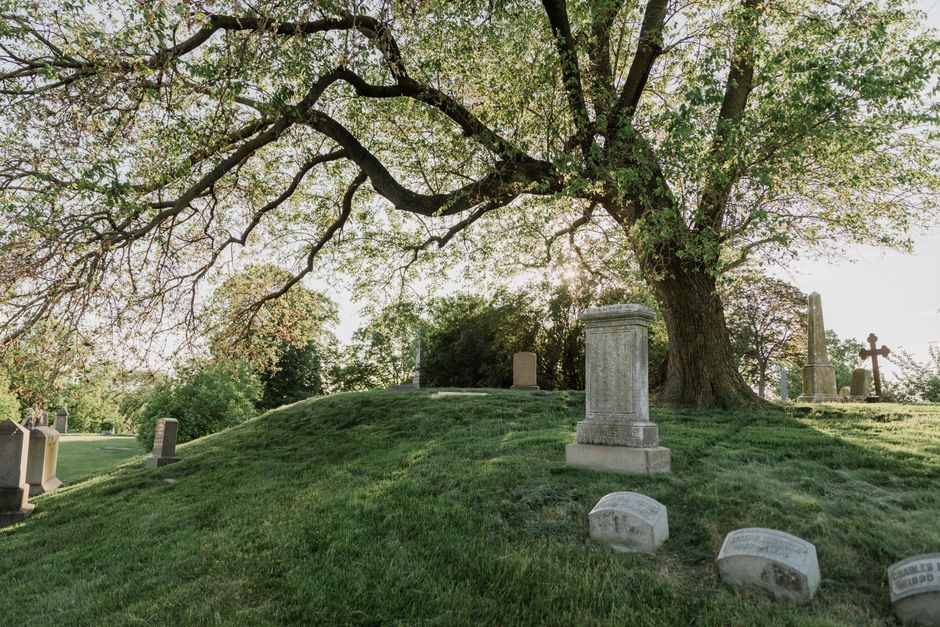
Public cemeteries achieve these lower prices partly because they operate without a profit motive. Many are run by city parks departments, county governments, or religious organizations that view burial as a community service. The trade-off is that public cemeteries often enforce stricter rules about grave markers, monuments, and decorations. While that might sound limiting, it actually works in your favor if you are trying to save money. A cemetery that requires flat bronze markers instead of upright headstones spares you the expense of a large monument. A cemetery that prohibits elaborate fencing or statuary eliminates those costs entirely.
Private cemeteries market their amenities aggressively: manicured landscaping, on-site chapels, perpetual care guarantees, and fewer restrictions on memorial design. Those features appeal to families who want a park-like setting and maximum personalization. But those amenities come with a premium price tag that simply does not align with an affordable burial budget. If your goal is to minimize cost without sacrificing dignity, a well-maintained public cemetery will serve that purpose admirably.
The Hidden Savings of Green Burial and Cremation Plots
Green burial has gained traction in the last decade for environmental reasons, but the financial case is equally compelling. A green burial plot typically costs between $1,000 and $4,000, and the price often bundles services that traditional cemeteries bill separately: the interment fee, a natural grave marker like a fieldstone or engraved wood, and perpetual grounds care. Because green burial sections do not require concrete vaults, manicured turf, or heavy machinery for grave maintenance, the cemetery’s operating costs are lower, and those savings pass to the buyer.
Cremation plots represent the most affordable entry point of all. A public cemetery will charge between $350 and $500 for a space designed to hold cremated remains. Private cemeteries charge between $1,000 and $2,500 for the same. Compare those numbers to the $2,000 to $25,000 range for casket plots, and the math speaks for itself. For families who are open to cremation, the plot cost becomes a minor line item rather than a major financial burden. Even if you later decide to purchase a columbarium niche or scatter the ashes, the upfront savings on the plot alone can free up funds for a memorial service, travel for family members, or other meaningful expenses.
3 Proven Strategies for Finding Affordable Cemetery Plots
Knowing the price ranges is only half the battle. The real savings come from acting on strategies that most buyers never consider. Here are three approaches that consistently yield affordable cemetery plots for those who use them.
Strategy 1: Check Veteran Benefits First
If the deceased or the person pre-planning served in the United States military, stop and check VA eligibility before spending a dollar. The Department of Veterans Affairs operates 144 national cemeteries where qualified veterans receive a burial plot at no cost. That benefit includes the grave opening and closing, ongoing care, a government-furnished headstone or marker, a burial flag, and a Presidential Memorial Certificate. Spouses and eligible dependents can be interred alongside the veteran in the same plot, also free of charge. There is no income test and no requirement that the death be service-connected. For a family that qualifies, this single benefit eliminates the largest line item in a funeral budget. Contact the National Cemetery Scheduling Office or your local VA office to confirm eligibility and begin the process.
Strategy 2: Buy Pre-Owned (Resale) Plots
A growing secondary market exists for cemetery plots that owners no longer need. People sell their plots for many reasons: a family moves across the country, a divorce changes burial plans, or an inherited plot goes unused. These sellers typically list their plots below the cemetery’s current retail price because they want to recoup some of their investment quickly. Platforms like BurialLink and Grave Solutions specialize in connecting these private sellers with buyers, handling the legal transfer of interment rights and providing escrow services to protect both parties. A pre-owned plot in a desirable cemetery can often be purchased for 30 to 50 percent less than the cemetery’s asking price for a new plot. The key is verifying that the cemetery allows transfers and that the seller has clear title to the interment rights before any money changes hands.
Strategy 3: Negotiate with Local Cemeteries
Most people do not realize that cemetery plot prices are sometimes negotiable, especially at smaller, privately owned cemeteries or those with unsold inventory. When you visit a cemetery office, ask specifically about end-of-row plots, spaces near roadways or perimeter fences, and sections that have been on the market for several years. These locations are harder to sell, and cemetery managers may discount them rather than let them sit empty. Also ask whether the cemetery offers payment plans. While not a price reduction, spreading the cost over 12 or 24 months can make an otherwise unaffordable plot manageable. Always request a written General Price List before committing, and compare it against resale listings for the same cemetery to gauge whether the price is fair.
What Happens If You Can’t Afford a Cemetery Plot?
Sometimes, despite every effort, the money simply is not there. When a family cannot afford any form of burial or cremation, the body is typically released to the county coroner or medical examiner. From there, the county or city administers an indigent burial program under state guidelines. In the vast majority of cases, this results in cremation, and the ashes may be interred in a common grave or held for a period before disposition. The process varies by jurisdiction, and no family wants to find themselves navigating it in the midst of grief.
If you are facing this situation, your first call should be to the county coroner’s office or the local social services department. Ask directly about the county’s indigent burial or cremation program, what documentation is required, and whether any remains are returned to the family. Some counties allow families to claim the ashes after a waiting period. Others do not. Knowing the policy in advance at least removes the uncertainty.
This safety net exists for a reason, and there is no shame in using it when circumstances leave no alternative. But it is also a powerful argument for proactive planning. Direct cremation, which costs a few hundred dollars in many areas, paired with a public cremation plot at $350 to $500, keeps the total burial cost under $1,000 in many markets. That is still a significant sum, but it is a reachable goal for many families who set aside small amounts over time. Veteran families should absolutely verify VA benefits before assuming they must rely on county programs, since the VA benefit covers far more than most people realize.
How to Buy a Cemetery Plot Without Overpaying
Walking into a cemetery office unprepared is the fastest way to overspend. Before you sign anything, request the cemetery’s written General Price List, which itemizes every charge from the plot itself to the interment fee, vault requirements, and marker installation. Federal law requires funeral homes to provide a GPL, but cemetery rules vary by state. Ask for it anyway. A reputable cemetery will provide one.
Next, read the contract carefully for the duration of interment rights. As noted earlier, casket graves typically come with 50 to 75 years of rights, while cremation graves may be limited to 25 to 40 years. Find out what happens when the term expires. Some cemeteries offer renewal options; others do not. You need to know before you buy.
Verify the cemetery’s regulations on grave markers, monuments, and burial vaults. A cemetery that mandates a concrete burial vault adds several hundred dollars to your total cost. A cemetery that only permits specific types of headstones from approved vendors limits your ability to shop around for a better price. These rules are not necessarily dealbreakers, but they affect the true cost of the plot beyond the sticker price.
Finally, compare the cemetery’s current pricing against resale listings for the same property. If a private seller is offering a plot in the same section for 40 percent less, that tells you the cemetery’s retail price is inflated. Use that information to negotiate or to decide whether the resale market is a better fit for your budget.
Frequently Asked Questions About Affordable Burial
Can I finance a cemetery plot?
Some cemeteries offer in-house payment plans that spread the cost over months or years. Terms vary widely, and interest may apply. Ask the cemetery directly and get the terms in writing before committing.
Are pre-owned plots safe to buy?
Yes, provided you use a reputable marketplace that verifies the seller’s ownership and handles the legal transfer of interment rights. Avoid private sales conducted entirely through classified ads without a formal transfer process.
Do religious cemeteries offer lower prices?
Many religious cemeteries offer discounted plots to members of their congregation or faith community. Non-members typically pay higher rates, though those rates may still undercut nearby private cemeteries. If you belong to a church, synagogue, or mosque, ask about their cemetery policies before looking elsewhere.
Your Next Step Toward an Affordable Burial
Affordable cemetery plots are not a myth, and they are not reserved for the well-connected. They are available through public cemeteries, veteran benefits, green burial sections, and the growing resale market. The difference between paying $25,000 and paying $500 often comes down to a few phone calls and a willingness to explore options beyond the first quote you receive. Start by browsing current listings on cemeteryplotlistings.com to see what is available in your area, or contact your local VA office if veteran benefits may apply. A dignified burial does not have to come with a devastating price tag.